Without Woodwork
Posted by Adam A. Ries in Home Improvement on October 25, 2010
This past weekend I removed the woodwork around almost absolutely every window in my family’s house. Why you may ask? Not just on impulse; we have a local lumberyard coming to the house this week to take measurements for new windows. Probably the last big (BIG) improvement project of this year, just in time to take advantage of the Federal Tax Credit for Consumer Energy Efficiency. So much to my family’s discontent, every window in every room of the house now looks like this:

Unpainted plaster edges, exposed chicken wire ends (apparently what they used in 1955 for quick lathe), and dirty fiberglass insulation. I was actually a bit surprised to find any insulation at all; in certain rooms, the curtains move when there are strong winds. Although the chosen windows aren’t the highest efficiency models available today, they will be a drastic improvement on the existing. That being said, after getting the advice of 2 different contractors, the decision was made to go with new construction windows rather than replacement windows. In researching windows, I found that standard replacement windows are installed inside the existing window frames; only the sashes are removed and the replacement windows are custom-made to fit inside the opening.
With our home, half of the existing windows are original while the other half have been replaced at one time, though probably at least 15 years ago. The newer (I use that term loosely) windows, however, are actually a few inches smaller than the homes framed openings. That means that on either side of the windows is between a 1″ and 2″ gap, stuffed with insulation, as you can see below in this close up.

Also, when the “newer” windows were trimmed out with woodwork, wall base molding was used to hide the large gaps since standard window trim would not have been wide enough. Not only did the wall base trim not match the woodwork around all the other windows, whoever played carpenter didn’t trim them out with window sills. So basically each of the poorly replaced windows stood out because they were trimmed to look like a 4″ wide photo frame. I understand that new construction windows will be a little more work than replacement windows, but when do I ever back down from a challenge? In the words of a contractor friend, “if it were my house, I would do it the right way.” Ok; new construction windows then. Enough said.
Now onto the windows that were chosen for this 1955 ranch home. We took many factors into consideration (including material, glazing type, warranty, and finish) and got price quotes from several different companies. The final decision was for double-hung, all vinyl construction, double pane, argon filled low E insulated glass, white interior and exterior. All the homes windows are originally double hung, but in wood. The price jump for wood windows was just not an option for this small of a ranch house, plus I know how low maintenance vinyl will be for the life of the home. Another driving factor was to purchase the windows locally. Although the windows themselves are manufactured in Oregon, our local lumberyard is a certified dealer. They measure, give quotes, deliver, and will even install them if you want that service. We are going to install them ourselves to save that much more. After all, what kind of DIY enthusiast would I be if I sat back and allowed someone else to install my family’s windows?
Roadside Redo – The Pickup
Posted by Adam A. Ries in DIY, Furniture on October 20, 2010
This is post 1 of a 3 (+) part series. Expect installment 2 at a later date when this furniture piece is closer to completion.
A few weeks ago, as I was on my Saturday morning drive to a Wedding Show, I spotted 2 things alongside the road that always catch my attention: an abused piece of furniture and a sign that read “FREE.” Actually, it was sitting in the midst of tarp-covered tables at a garage sale as it was quite early and had rained during the night. I stomped on the brakes (safely, looking in my rear view mirror first), and pulled along the road to get a better look. It was a table height cabinet, one drawer across the top and two hinged doors at the bottom. Having been rained on and a in a bit of disrepair (completely falling apart), I got back in my car and drove off. 20 minutes later down the road, I called my sister (waking her up far to early for her Saturday) and asked her to pick it up for me. If there is one thing that adds even more enjoyment to furniture refinishing, it would have to be getting the furniture piece for free. On top of that it would be saving a furniture piece from inevitable death by bonfire or life sentence to a landfill. That same week I began peddling with the piece, completely disassembling it in my garage for a few hours each evening. The cabinet was not built very well, nor was it even very old in age; it was, however, free lumber, already designed, sawn to the right sizes, and a desired piece of furniture that I knew I could find a use for.
(this is where I would insert the before photo. unfortunately, I did not photograph the piece before I began disassembling and sanding it.)
The cabinet is very similar in size and shape to this Better Homes & Garden Entertainment Hutch which sells for over $200 at various home stores and isn’t solid wood (a major criteria for furniture of mine).
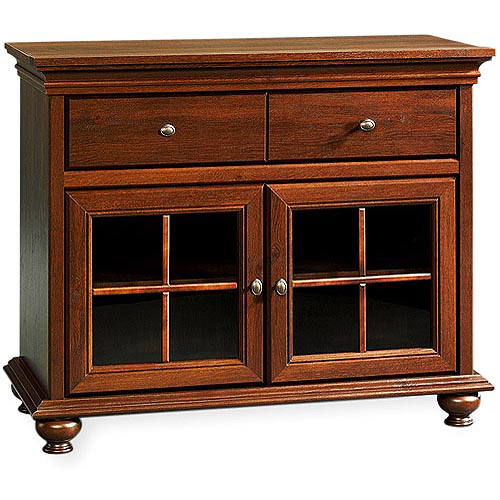 After a few weeks of sanding (burning up my orbital sander in the process), I was ready to assemble it this week. Not having to work Thursday, I loaded all the pieces into the mini van (my make-shift pickup) and headed to my Grandfather’s woodworking shop a short drive north from Van Wert. Although someone else built and cut all the lumber for it, with my woodworking background I intended to build it better, stronger, faster.
Now for a quick lesson in woodworking joinery. For starters, you don’t attach end grain directly to face grain. It just doesn’t work well. First attempt a dado joint.

A dado wouldn’t have worked for this, it would have made the cabinet slightly narrower and I was afraid the drawer would have rubbed on each side. Second choice? Nailing strip or cleat.

A more noticeable choice, but I wasn’t concerned. After an entire afternoon of trying to put the cabinet back together (make sure to label every piece), I finally have the cabinet reassembled…with my Grandfather’s help.
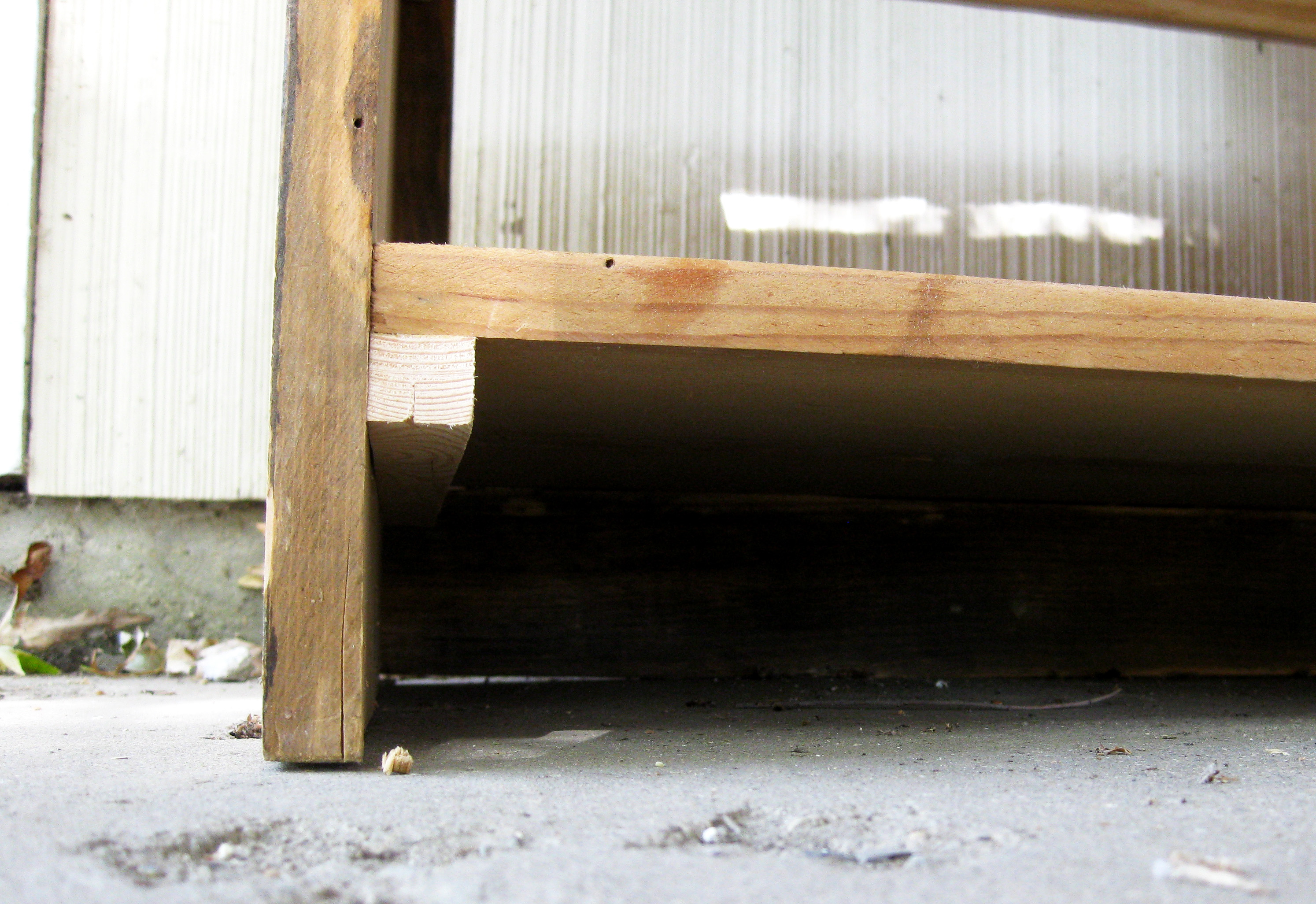
Here is a photo of the bottom shelf, taken from the back. It shows how I attached the bottom shelf to the side wall of the cabinet using a cleat. The cleat is glued and stapled with brads to the side wall, then the shelf is glued and stapled to the cleat and the side wall. Using a cleat here practically triples the glued surface areas.
Between this post and part 2, I will be filling all the nail holes (from the original builder; I used mostly wood glue and clamps and a brad nailer where necessary) with a good stainable wood putty, finish sanding and finding hardware (I really didn’t like the hardware that was on it when I picked it up). You can see from this photograph that this piece has knots everywhere and steep variances in color. I will discuss how I will select a stain color, prepare the cabinet, and finally stain it in the second post of this project. Expect that post in a few weeks, with the final during and after photographs shortly!
Matching my Mirrors
Posted by Adam A. Ries in Other on October 11, 2010
Now I know I didn’t mention car repair when I introduced myself and my blog in the first post, but my most recent DIY adventure has been replacing my passenger-side mirror. A few months ago (OK, embarrassingly I will admit that it has been since last December) someone knocked off my passenger side door mirror. When I first saw the mirror hanging only by the electrical wire, I immediately thought some student must have tried to park beside me but got too close. Then I realized I was parked in the last spot in the parking row, directly next to a busy sidewalk. So therefore I can only imagine that some disgruntled college student smacked my mirror off in frustration over failing a freshman level course (this occurred the last day of my next to last semester at Kent). So yes, I drove for almost 10 months with only my driver side mirror. After a college friend noticed I hadn’t gotten it fixed yet when we met for dinner last week, I decided it was time to act.
I priced replacement mirrors right after the incident, but turned to the internet one evening last week determined to find a cheap mirror. After finding the mirror I needed at prices ranging from $35 and $89, I stumbled upon DiscountAutoMirrors.Com. It turns out they carried my mirror for only $16.95. The shipping and handling was steeper than I would have expected, but altogether the mirror set me back just over $30. It arrived quite quickly, just 2 full days later (explaining the high shipping cost). To begin, I had to remove the remaining plastic piece of the broken mirror. I was pleased to find it could be easily removed. I just popped off the triangular plastic cover inside the door and removed 3 screws.
 All that remained of the original passenger side mirror.
The new mirror arrived unpainted. It turns out that purchasing aerosol cans of a 1995 Toyota paint color is quite pricey, and with light color vehicles a perfect match is highly unlikely because of years of sun fading. Black automotive paint, on the other hand, is only $6.99 for a small can at my local Advance Auto Parts store. The can instructed me to clean the area well, and buff with super fine sandpaper. Because I rarely (never) have 600 grit sandpaper on hand, I used super fine steel wool on the replacement mirror and washed it with rubbing alcohol (also recommended on the can).
Because the driver side mirror was still the original car color (Silver Leaf, if you are wondering), I wanted to paint it black also. I first cleaned it extremely well to get rid of 15 years of bug residue. It turns out that my cheap dollar store degreaser called Greased Lighting is the best car cleaner I have ever found. While waiting for the mirror to dry, I actually used the degreaser on the entire grill and front bumper! Have you ever seen a cleaner bumper!
 Cleaning the Driver Side Mirror with Greased Lighting.
 How shiny is that bumper? I mean, I was amazed.
I carefully masked off the entire area around the driver side mirror with masking tape and newspaper, then covered the entire front, top, and side of my car with painter’s plastic sheets for protection against overspray. Now to the painting. I gave each mirror two thin coats of paint, making sure to wipe the mirror free of dust with a soft cloth before each. The results were two mirrors with a deep, even black sheen. As recommended by the friendly associates at the auto parts store, I also purchased an aerosol product called Clear Coat for $6.99. This adds another layer of depth to the paint finish along with even sheen and an added layer of protection. An even layer of clear coat to both mirrors and all I had to do was wait for the finish to dry to reattach them.

Finally, the steps to attach the replacement mirror: connect the wire from the door panel to the new mirror; attach the mirror with the 3 screws from the original mirror; snap on the small triangular plastic panel to cover the mirror screws. And there you have it, two beautiful matching black mirrors (and a super shiny no bug bumper!).
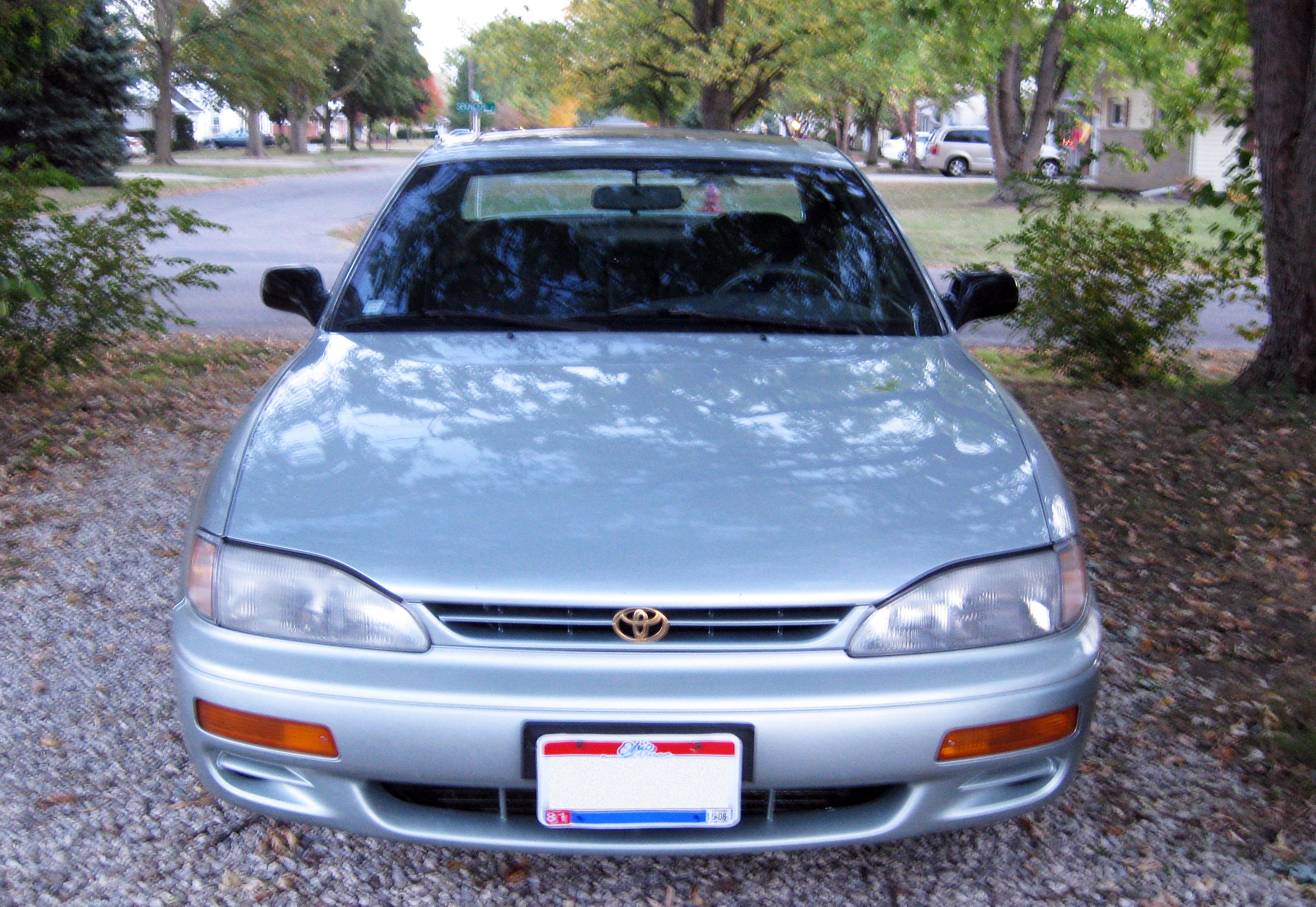
From start to finish, this project took about 4 hours. That includes the time required for the mirrors to dry after being washed and allowing the paint and clear coat to dry before attaching the replacement mirror. In total, the new mirror and modifications to the original mirror cost a whopping $47.98. Thanks a lot to whoever knocked off my mirror back in December.
 Up and Adam [Ries]
